About
If aircraft flies faster than present velocity, it needs to fly faster than sonic speed.
The velocity which is faster than sound is called supersonic.The problem of the supersonic flight is its poor aerodynamic performance.
In order to solve this problem, it is proposed to heat air with laser. Our laboratory is researching on how to make more efficient supersonic flight by using this method.
 Fig.1 Drag reduction method for SST(Super Sonic Transportation) |
About reserach
The goal of this investigation is to realize a commercial supersonic transportation which has not been operated after the abortion of Concorde. One major reason that led to the abortion of Concorde was its poor performance of fuel efficiency. The large wave drag caused by shock waves is occurred during supersonic flight. This drag does not exist during subsonic flight. This drag increment leads to worsen the fuel efficiency.
The objective of this investigation is to improve the aerodynamics performance of supersonic transportation by using the interaction between low density bubbles generated by repetitive laser pulses and shock waves. This method is called “Fly by Light Power(FBLP)” and we are approaching our reserach from two perspectives: experimental and numerical investigations.
Current outcome
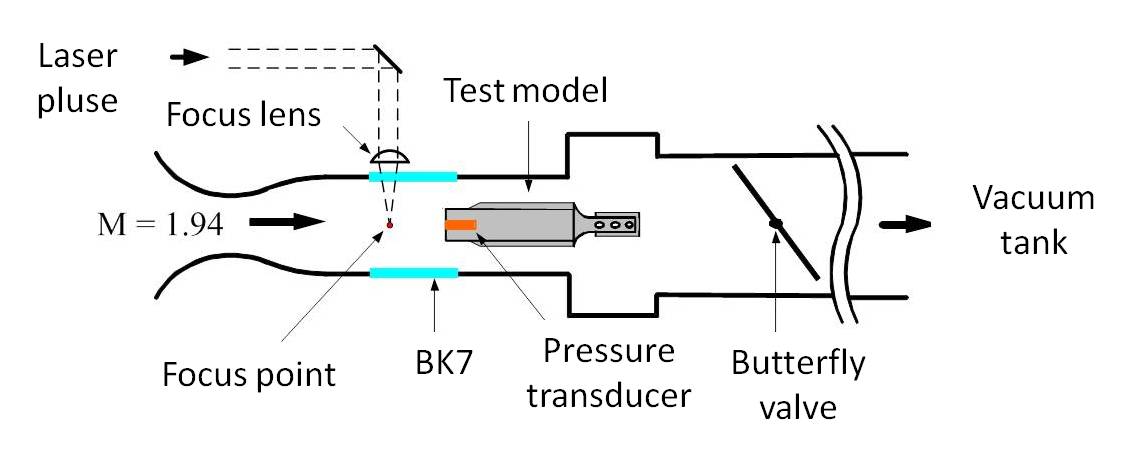
 Fig.2 Experimental apparatus |
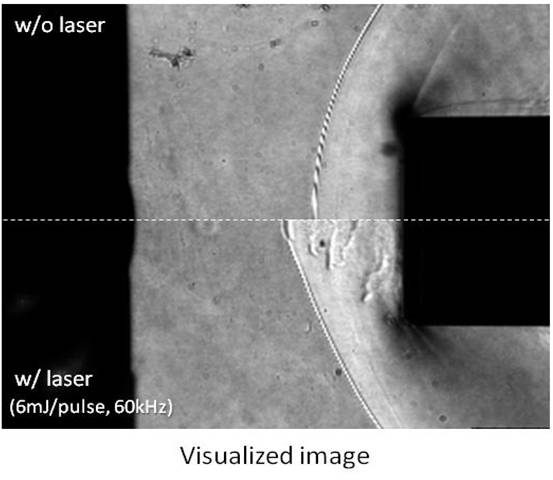
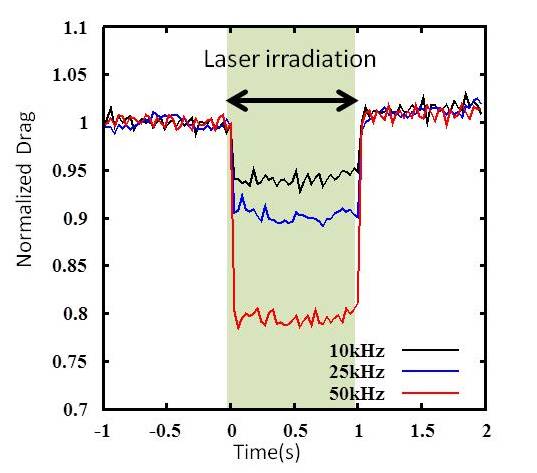
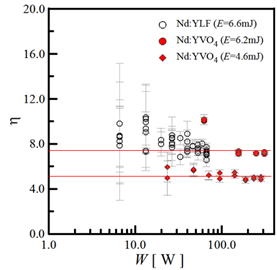
The supersonic wind tunnel that we use for our experiment is designed by students in our laboratory(Fig.2). The test model is 20mm diameter cylinder. Bow shock made by Mach 1.94 flow and low density babble generated by laser irradiation interacts. This interaction makes bow shock moderate and creates vortex rings. This phenomena decreases the drag of the cylinder model about 20%, and the η(energy deposition efficiency) reached 10(Fig.3~5). From numerical simulation, it has been found that vortex rings generated by baroclinic effect have large effect on for drag reduction mechanism.

Fig.3 Bow shock deformation |  Fig.4 Drag profile |  Fig.5 energy deposition efficiency vs.input energy |
How to Drag Reduction?
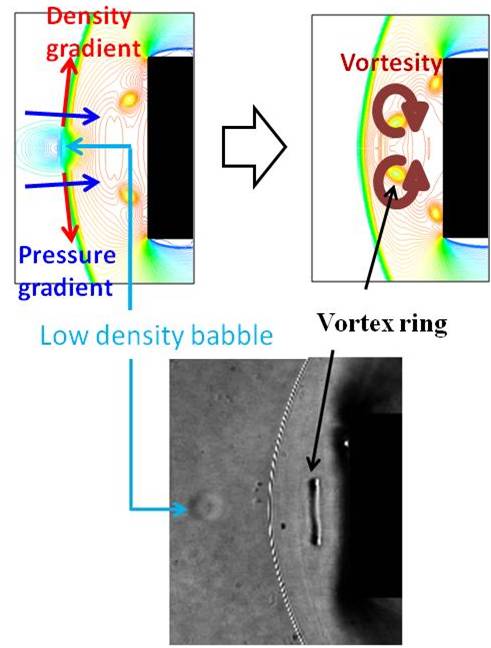
 Fig.6 Baroclinic effect
|
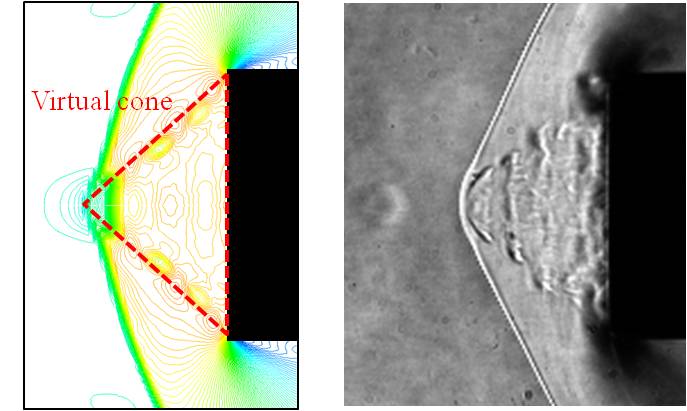
 Fig.7 Virtual cone |
Interaction between density gradient and pressure gradient generates vorticity. This phenomena is called ‘baroclinic effect’.(Fig.6). In our experiment, shock wave generates pressure gradient at the front and the behind of it, and laser heating generates low density babble. Baroclinic effect occurs when shock wave and low density babble interacts. Subsequently, vortex rings like doughnut is generated in front of the test model.
By increasing repetitive frequency of laser, more vortex rings stay in front of the test model . It creates the area which called ‘Virtual cone’(Fig.7). Virtual cone acts as cone attached in front of the cylinder test model. It makes bow shock attenuation. Consequently it reduces the drag.